The Guy With the Mic Before the Cameras Roll: How Sitcom Warm-Up Acts Became Comedy's Strangest Lost Art
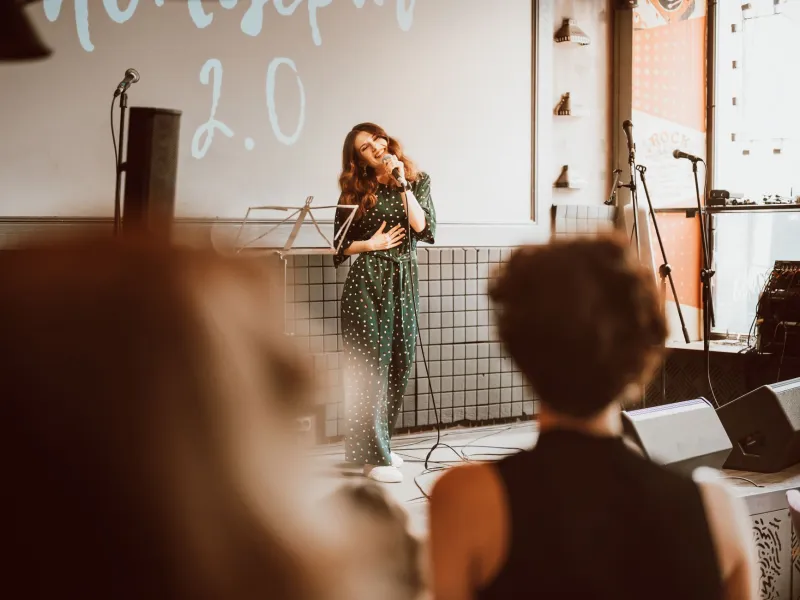
Before a sitcom audience laughs at a joke, it has to be taught how to laugh. That is the odd, invisible job of the warm-up comic: part hype man, part crowd therapist, part human laugh track. In 2026, the role is rarer than ever, but its fingerprints are all over the shows we still quote.
The Job That Happens Before the Job
The setup is simple and deeply strange. You file into a studio, you sit under hot lights, and a person with a microphone tells you when to clap, how to clap, and why the funny-looking guy in the cardigan is about to do a bit about airport food. Then the cameras roll, the actors hit their marks, and the warm-up comic disappears into the wings like a magician who just wants to make sure the room is loose.
Veterans of the circuit describe the work as a hybrid of stand-up, crowd control, and babysitting. You are not the show. You are the pre-show, the mood-setter, the person who has to make 200 strangers feel like a group before a single joke lands. If the audience is stiff, the sitcom sounds dead. If the audience is too hot, the actors start playing to the room instead of the camera. The warm-up comic lives in that narrow band between enough and too much.
A Strange Little Craft
The rituals are wonderfully specific. There is the classic test of who came from out of town. There is the bit where you ask who has seen the show and who is just happy to be out of the house. There is the mandatory reminder that laughing is not a competition, even though it absolutely is. And there is the moment when a warm-up comic explains the sacred geometry of a sitcom taping: scenes will be shot out of order, there will be retakes, and nobody should yell out a plot prediction unless they want to become part of the show.
For decades, this was a real career. Not a glamorous one, but a real one. Warm-up acts worked the studio circuit in Los Angeles and New York, and the job fed into the larger comedy ecosystem. A good warm-up comic could read a room, rescue a flat scene, and keep a crowd from turning on a taping that had already run long. The work rarely made headlines, which was the point. It was comedy's backstage plumbing.
Why It Mattered More Than Anyone Admitted
The warm-up comic helped create the sound of American sitcoms. That may sound like an overstatement until you remember how much of a sitcom's rhythm depends on the audience. The pause before a punchline. The delayed chuckle. The big communal laugh that tells viewers at home, okay, that was the joke. None of that is accidental. A room has to be primed.
There was also a practical function. Studio audiences are not naturally patient. They are tired, they are hungry, and they have been told to turn off their phones. A warm-up comic kept them from mutiny during lighting resets and costume changes. In the process, the job became a strange little archive of what made crowds laugh before the internet trained everyone to perform their reactions for strangers.
The Streaming Era and the Ghost of the Warm-Up
By 2026, the economics have shifted. Streaming comedies often skip the multi-camera studio audience entirely. Productions that still use a live crowd are more likely to rely on a producer or a cast member to fire up the room. The dedicated warm-up comic has not vanished, but the role has become a boutique gig, a nostalgia act, a thing you hear about on a podcast and think, wait, that was a job?
That is a loss, though not for the reason you might expect. The warm-up comic was never the star. The job was to make sure the star got the reaction they needed. It was invisible labor in the most literal sense. And yet the weird rituals linger. You can still hear the ghost of the warm-up in every sitcom that pauses a beat too long for a laugh that may or may not arrive.
The Last Laugh?
The warm-up act is not completely gone. It survives at tapings, in specials, and in the memories of people who sat in a studio audience and got instructed to clap like they meant it. It is a reminder that comedy is not just written and performed. It is hosted. Someone has to stand in front of the crowd and say, okay, here is how this works, now please laugh like you are having a good time.
In 2026, that sounds almost quaint. But watch an old sitcom with a live audience and listen closely. The laughter has a shape. It has a warm-up. And somewhere, a guy with a microphone is still trying to get a room full of strangers to loosen up before the cameras roll.