Potato-Flake Snow and Real Tears: How the Holiday Movie Flood Became America's Loudest Comfort Food
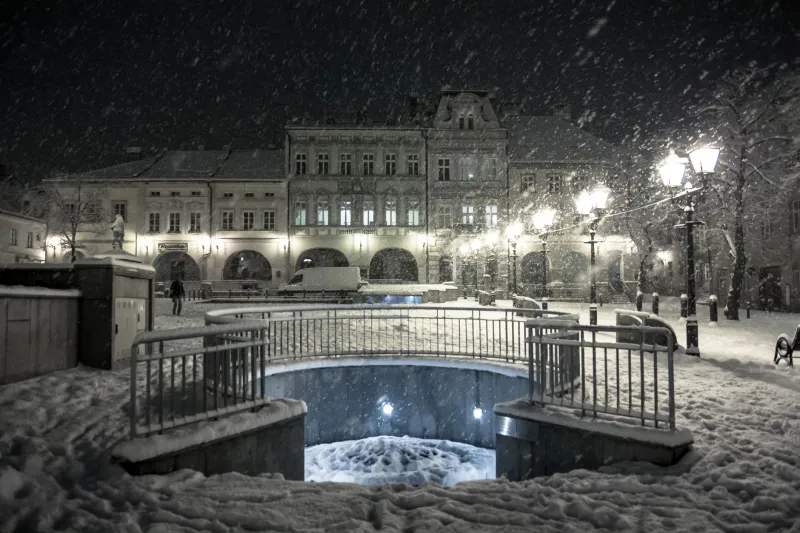
Somewhere in British Columbia right now, a woman in a peacoat is walking through a small-town square toward a man holding two cups of cocoa. The snow is falling. The snow is potato flakes. It is 58 degrees. Nobody on set is cold, and nobody watching at home will care, because the woman and the man are about to bicker for eleven minutes and then fall in love for the rest of their lives, and that is the contract.
We are ten days into November, and the holiday movie flood is already at flood stage. It started in late October, as it always does now — a few preview weekends, a couple of "Christmas in July" leftovers, then the dam breaks. By the time you read this there are more new holiday titles than there are nights left in the year. Cable networks, streamers, a couple of faith-based upstarts, and at least one app that seems to exist solely to distribute movies about bakeries: all of them are dumping red-and-green content into the feed at a rate that suggests someone, somewhere, is panic-buying tinsel.
And yet. And yet the audience shows up. Not just shows up — shows up with a spreadsheet.
The Genre Has Rules, and the Rules Are the Product
Start with the checklist, because the checklist is not a bug. A big-city professional with a job that sounds fake ("brand strategist," "corporate closer," "app developer who hates Christmas") gets dispatched to a town with a name like Mistletoe Falls or Cedar Hollow. There is an inn, a bakery, a cider press, or a tree farm, and it is failing. There is a widowed parent. There is a wisecracking kid, a sassy grandmother, or a dog wearing a scarf. There is a handsome local who owns a plaid shirt and a truck. There is a suspiciously perfect rival who is clearly doomed by minute forty.
At roughly the eighty-minute mark, someone runs through a light snowfall to stop someone else from leaving. A tree gets lit. A community center gets saved. A dead mother is invoked, warmly, in a speech.
You know how this goes. That's why you're here. The genre isn't hiding the machinery — it's showing you the machinery like a magician who's decided you'd have more fun backstage. The border between "so bad it's good" and "actually good" gets thinner every year, and by now most viewers have stopped checking which side they're on.
A Parallel Star System Nobody Talks About
Here's the thing the snark misses: these movies have their own celebrity ecosystem, and it's thriving. There are actors who have led four, five, six of these things in a single season — names your aunt knows instantly and your group chat doesn't know at all. There's a whole bench of former teen-idol singers, nineties country stars, and sitcom dads who now earn steady work as small-town mayors. A musician you loved in 2003 shows up as a "retired pop star who found herself in Vermont," which is both a role and, gently, a business model.
The economics explain everything. These films shoot in roughly two weeks, often several at once, often in summer, often reusing the same gazebo. The cost of a single prestige drama episode could underwrite a dozen of them. They are cheap, fast, ad-friendly, and — crucially — rewatchable in a way almost nothing else on television is. Formula plus volume plus low overhead equals a machine that keeps running whether or not critics acknowledge it exists.
The Fake Snow Is Doing Something Real
It's easy to mock the flake situation, so let's do it properly. The snow is paper. The snow is soap flakes and potato starch and a substance called "snow blanket" that gets rolled out like carpet between takes. The breath you see is sometimes added in post. The mittens are often hiding a script card.
But the artificiality is the appeal. A holiday movie that looked like a real New England town in an actual blizzard would be cold, dangerous, and expensive. This looks like a diorama. It feels like a diorama. Everything in it is safe, and small, and within walking distance of a bakery. In a year when the news is what it is, "safe and within walking distance of a bakery" is a legitimate artistic position.
Meanwhile, the Fans Are Treating It Like a Sport
What's genuinely new is the ritual around the watching. Group chats keep running tallies. People build brackets in November and seed them by trope density. There are drinking games keyed to specific lines ("I'm not staying for the festival"), bingo cards for dead-mother flashbacks, and entire online communities that log each new release within hours of it dropping, arguing about whether the tree lighting happened too early and whether the rival was dispatched with sufficient cruelty.
The tone in those spaces is the key detail. It's not irony. It's closer to the way people talk about a beloved regional food — affectionate, granular, mildly obsessive, and completely unbothered by outsiders who don't get it. Nobody there needs you to be impressed. They have enough.
Why It Keeps Working
Strip it down and these movies are doing something old-fashioned. They're folk art, in the most literal sense: cheap, repetitive, made fast by people who know the form, consumed communally by an audience that participates in it rather than just receiving it. Think community theater, quilt squares, church Christmas pageants, local parade floats. Nobody reviews the parade float on craft. The float is a ritual, and the ritual is the point.
So yes, it's Christmas in November again. The snow is potato flakes and the mayor is a guy from a band you had a poster of, and there are forty more of these coming before December 25. The correct response is not a smirk. It's a mug, a blanket, and a pen, because you're going to want to fill out your bracket.