Press Up, Up, Down: The Weirdos Still Digging for Secrets Buried in Old DVDs
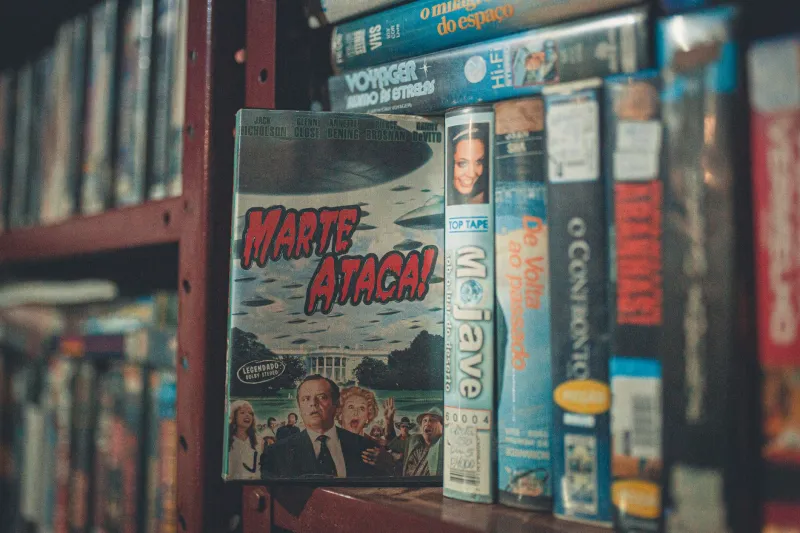
The DVD player is in a closet somewhere, tangled in a cable that is not the cable it needs. Down at the thrift store, wedged between a workout video and season two of something forgotten, there's a disc from 2003 with a secret menu on it that has not been opened in fifteen years. Someone, somewhere, is about to buy it for a dollar and go looking.
That's the whole genre, really. Not the movie. The hunt.
What an Easter Egg Actually Was
For the uninitiated: a DVD easter egg was a hidden feature built into the disc's menu, findable only if you knew to look. A button that didn't highlight. A spot where pressing left instead of right made the screen flicker. A code — enter 1-9-7-7 on the remote, or hit a specific arrow sequence at a specific moment. What waiting behind it varied wildly: a blooper reel, a fake commercial, an alternate ending, a short film, a joke at your expense, a musician's commentary track that nobody had announced.
They existed because the format allowed it. Early DVD authoring was a small industry with genuine competition, and studios used interactivity as a selling point. "Special edition" meant something you could charge extra for. That arms race produced some genuinely unhinged menus, and it also produced a decade-long culture of people pausing screens and jabbing at the d-pad like they were cracking a safe.
The Legends, Ranked by How Much Time They Ate
Ask five collectors for their pantheon and you'll get six answers. Here's a defensible attempt, hedging noted, because DVD lore is exactly the kind of history that gets mangled by retelling.
The one where you can reorder the movie. The special-edition disc for a certain 2000 amnesia thriller famously let you unlock the film in chronological order — a version the director had spoken about for years. Finding it required knowing the trick. Watching it that way rearranged your entire understanding of the story. This remains the gold standard: an easter egg that isn't a joke but a second movie.
The white rabbit. A 1999 science-fiction blockbuster built prompts into the film itself, so that choosing to follow a certain character's invitation sent you to a pile of bonus material. Clever, seamless, and impossible to replicate on a service that just auto-plays the next thing.
The menu that talks back. A mockumentary about a famously fictional heavy metal band used menus featuring the characters themselves in character, with different "personalities" you could cycle through. Some visitors reportedly sat on the menu screen for ten minutes just to see what would happen. That is the entire promise of the format in one gag.
The button that says you are not your job. Depending on which fan archive you trust, a certain 1999 film about fighting put messages in its menu that appeared only after the disc had been sitting idle — long enough that most renters had already wandered off to the kitchen. It's the platonic ideal of a DVD easter egg: pointless, patient, and weirdly unsettling.
The unlabeled short films. Pixar discs from the era routinely tucked Oscar-winning shorts behind invisible buttons, which meant an entire generation of kids found them by accident and an entire generation of parents never knew they existed. This is how you create a lifelong collector: hide something good and don't tell anyone.
So Why Did Studios Stop?
Not out of malice. Out of math.
First, streaming has no menus. There is no surface to hide anything on — just a grid of thumbnails that scrolls until your thumb hurts. Second, physical disc sales collapsed, and with them the retail floor space that once made "special edition" a marketing category worth investing in. Third, authoring a hidden feature meant testing it across dozens of players, and hidden buttons are exactly the kind of thing that breaks on the one model your uncle owns. Fourth, and maybe most damning: you can't measure engagement on a secret. A joke nobody finds is a joke that shows up in no report.
The result is that the modern "easter egg" migrated. It lives in YouTube commentary tracks now, in cast Q&As, in the kind of behind-the-scenes clip that gets pushed to you whether you asked or not. The surprise didn't vanish. It got monetized, which is not the same thing as being preserved.
The People Digging Anyway
Here's the good news: nothing about a disc degrades when a corporation stops caring. The eggs are still in there. They're just undocumented.
So there's a small, stubborn ecosystem keeping records. Long-running online archives that catalog hidden software and disc features. Wiki projects that document button-by-button directions for individual releases. YouTube channels dedicated to recording menu screens no one has filmed — because a video of a menu is, weirdly, the only way to prove a feature existed after the disc goes unplayable. Archivists ripping and uploading menu footage before the lasers die. And a whole thrift-store economy of people buying dollar discs specifically to see what's buried in them.
It's the same impulse that drives people to collect vinyl they can't easily play and old game consoles they have to recap by hand. The format becomes the hobby. The border between "media" and "artifact" gets crossed, and once you're on the other side, a $1 copy of a forgotten comedy is a locked box with a possibly great joke inside.
Can It Come Back?
Probably not at scale, and honestly, maybe it shouldn't be forced. But the boutique end is alive. Small labels that lovingly reissue old genre films have figured out that a hidden feature is cheap goodwill and free press. Video games — including tiny indie ones — still bury things for the specific joy of watching players find them. And the vinyl-adjacent physical-media revival has given the whole idea a second wind: people are buying objects again, and an object that rewards curiosity is a better object than one that doesn't.
Which is the actual argument here. An easter egg is a small act of generosity from a stranger who assumed you were the kind of person who'd poke around. There's no algorithm in it. No engagement metric. Just a joke left in a wall for whoever thinks to check.
So go find the DVD player. Untangle the wrong cable. Buy the dollar disc. Press up, up, down, left, and see what happens. Worst case, you watch a bad movie. Best case, you find something nobody has opened since 2004, and for a minute you're the only person in America who knows it's there.