Everything Must Go: Why We Keep Watching the Lights Go Out at the Mall
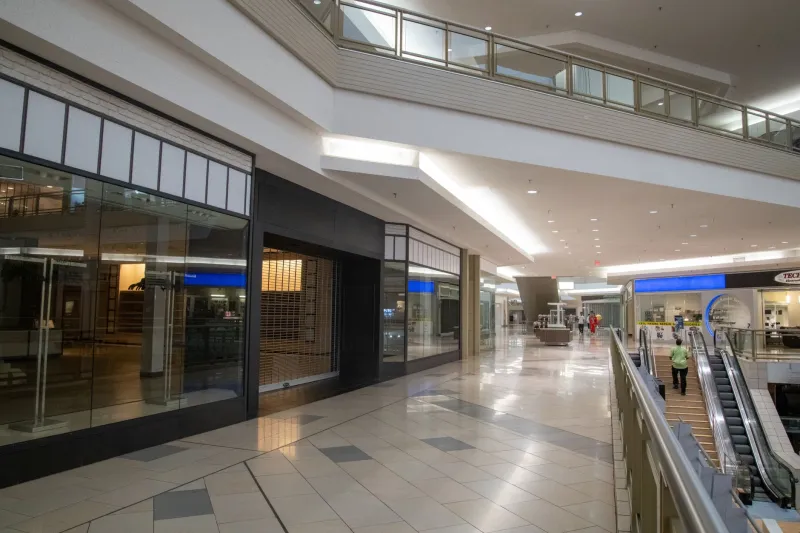
The first thing you notice in these videos is the sound. Not silence — a mall is never silent — but the specific acoustics of a building designed for 4,000 people and currently holding two. A fountain running somewhere. One fluorescent tube buzzing near the ceiling. The squeak of the videographer's sneakers.
If you've spent any time on YouTube in the past decade, you've seen this. Dead mall tours. Dead mall compilations. "The mall at 3 a.m." walkthroughs. Hours of footage of someone pushing a cart through a JCPenney that closed years ago. Millions of views, and comment sections full of people saying, unprompted, "I can smell this video."
Here's my argument: the dead mall is the most honest ruin this country has, and we're using it wrong.
The genre has a grandfather, and it's a car chase
Rewind to Dixie Square Mall in Harvey, Illinois — a real mall, opened in 1966, dead by 1978. In 1979, The Blues Brothers filmed a car chase through it and the production left the wreckage behind. The building then sat there for more than three decades, rotting in plain sight, becoming a landmark for urban explorers and eventually the patron saint of the entire aesthetic.
That's the blueprint. Commerce leaves, and the shell is so big and so specific that it becomes a stage. Every dead mall video since is a rerun of that joke, minus the Bluesmobile.
Why the camera loves an empty escalator
There's a structural reason these spaces photograph so well. Malls were engineered to be looked at. Long axial sightlines, skylights, atrium ceilings, terrazzo floors, an escalator as a literal moving staircase to nowhere — the design vocabulary is theatrical. Empty it out and you're left with a stage set after the cast has gone home.
Which is why "liminal space" and the backrooms and the dead mall are cousins. All three take a place built for crowds and remove the crowd, and the brain short-circuits. In some of these buildings the escalator still runs, which is somehow worse than if it didn't.
The horror movie was already in the building
Filmmakers got here early and never left. Chopping Mall staged a slasher inside a thriving mall in 1986, the joke being that the place was already ominous. Night of the Comet shot its post-apocalypse inside a fully stocked department store. Stranger Things built an immaculate 1985 Starcourt Mall on a soundstage for its third season in 2019 and turned a monster loose in it, because by then the mall was already a memory you could only rebuild with plywood and neon.
Indie horror has since made the abandoned mall a permanent set: cheap to shoot, instantly eerie, loaded with symbolism that requires zero explanation.
Okay, but the nostalgia is doing something sneakier
This is where I get suspicious. Watch enough of these videos and a certain tone creeps in — the reverent voice-over, the ambient synth, the mourning for a place where the commenter was, statistically, probably not having a great time.
Let's be honest about the 1990s mall. It was a place where teenagers were tolerated at best and hassled at worst, all of it under fluorescent light and black camera domes. The food court was a negotiation. The music was pitched at you. Plenty of us were in there every weekend and still couldn't tell you why.
And the mall's rise wasn't free. It arrived alongside downtowns hollowing out and Main Streets going quiet — and then the exact same thing happened to the mall when the internet got fast. The abandoned food court isn't a tragedy that befell a building. It's the third or fourth act of a long one.
So the aesthetic carries a little anesthesia. Nothing in the world feels like the opening piano of a vaporwave track. It's comfort food for a generation that has watched several rounds of infrastructure quietly rot out from under it, which is precisely why you should be careful about how good it feels.
What we're actually mourning
Scrape off the mood boards and I think the honest answer is dumber and sadder. We are not nostalgic for the mall. We're nostalgic for a place to go that wasn't home, wasn't work, and only pretended not to be a purchase.
Meanwhile we keep building warehouses and apartment complexes with a gym on the second floor. We are not building third places — not the town square version, not the mall version, not anything. So we do the next best thing: we film the corpse of the last one, score it with a sad synth track, and call it a vibe.
The escalator keeps running
The best of these videos do something the mood boards can't. They document. Roof collapses, water damage, demolition dates, the exact year a Sears went dark. That's a record of the American retail implosion that nobody else is keeping, assembled by people with a camera and too much free time.
The rest of it — the merch, the playlists, the "haunted mall" short films — is fine. Harmless. Occasionally very funny. Just don't get too misty. The mall was never the place you remember. But it was a place, and we're running short on those, and that's the part worth staring at.