Channel 99 Won’t Die: The Beautifully Unpolished World of 2026 Public Access
There’s a special kind of jet lag that comes from scrolling past 400 streaming titles and realizing you’d rather watch a guy in a folding chair explain the load-bearing virtues of a lawn chair. In 2026, that guy is still out there. He’s on public access.
Public access has been declared dead roughly every five years since cable was invented. Somehow it keeps showing up, like a neighbor who never returned your ladder but still waves from the driveway. The budgets are tiny. The production values are accidental. The scheduling is a rumor. And yet, if you live in a market where the local public, educational, or government channel still gets carriage, you can find television that feels genuinely unmediated—less like content and more like somebody left the camera running because they had something to say.
The Anti-Algorithm
Most of what we watch in 2026 is designed to keep us watching. Streaming platforms chase prestige, chase retention, chase the next true-crime obsession, and sand every edge off the recommendation feed. Public access does the opposite. It doesn’t know what you like. It doesn’t care. It’s a town bulletin board with a broadcast signal.
That’s the strange appeal. A public access show can be about lawn chairs. It can be about a haunted basement. It can be a call-in program where the host disagrees with a caller about whether the local diner changed its gravy recipe. There is no pilot season, no focus group, no note from a streaming executive asking for a clearer hook in the first eight seconds. The hook is that somebody in your town decided this needed to be on TV.
Lawn Chairs, Ghosts, and the Art of the Unpolished
The lawn-chair reviewer is not a punchline. He’s a genre. Every public access scene has someone who has turned a deeply ordinary obsession into a recurring segment. The camera angle is wrong. The lighting is a ceiling fan. The review is thorough in a way that feels almost legalistic. You learn about weight distribution, cup holders, the subtle betrayal of a mesh seat after one summer. It is deeply boring in the best possible way.
Then there’s the teen-run paranormal talk show, which might be the purest form of 2026 public access. A group of kids with a borrowed camera, a folding table, and a Ouija board from a thrift store treat a local legend with the seriousness of a Senate hearing. They take calls. They argue. They play grainy audio recorded near a parking garage and ask, with total sincerity, whether anyone else heard that. The production is a mess. The commitment is total.
This is the thing streaming forgot: unpolished doesn’t mean careless. These shows are often made by people who care too much, not too little. They’re doing it because no one else is going to make the show they want to watch. That’s a different kind of ambition than prestige TV. It’s closer to a zine, a bulletin-board notice, or a yard sign with too many words on it.
Why the Tiny Audience Stays
The audience for these shows is not large. It might be twelve people, and three of them might be related to the host. But those twelve people are not casual. They call in. They recognize the theme music. They know the host’s dog by name. They tune in at a time when normal people are asleep because that’s when the slot was available.
There’s a loyalty that comes from proximity. A Netflix show can be great, but it’s not yours. A public access show belongs to a place. It mentions streets you’ve driven on. It interviews someone you’ve stood behind at the pharmacy. It has the specific texture of a town in a way that no algorithm can fake. When the host mispronounces a local name, you know exactly which name and exactly why.
The Economics of a Vanity Project
Public access is not a business model. It’s a civic leftover, a remnant of the idea that local cable should include room for people who aren’t corporations. In 2026, that room is smaller than it used to be. Channels have folded. Equipment has aged. Volunteers have burned out. But the ones still standing have figured out a simple truth: you don’t need a budget if you have a schedule and a stubborn streak.
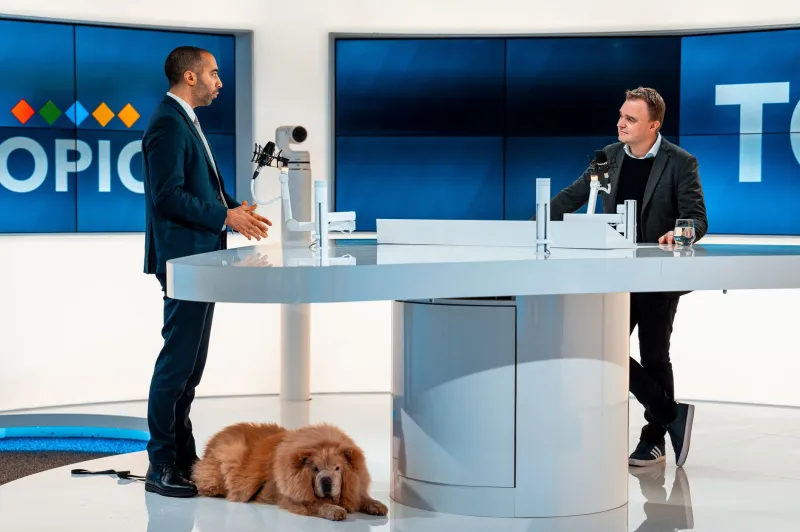
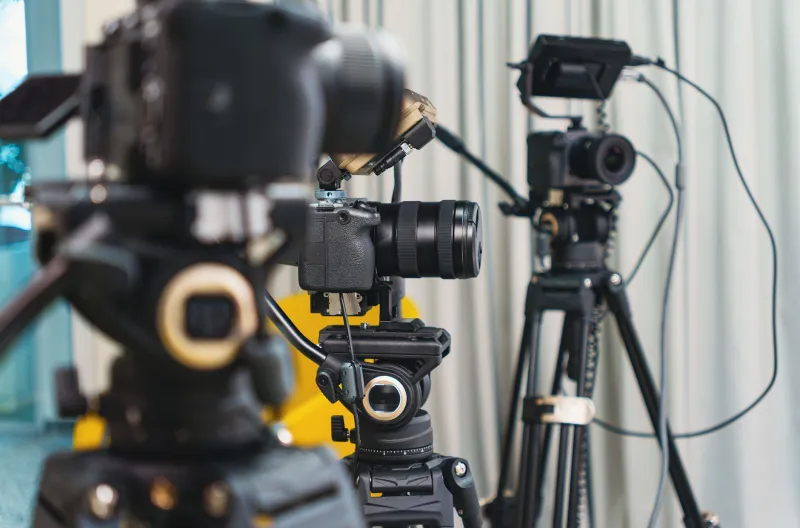
The shows are often shot in living rooms, libraries, community centers, and borrowed studios. The graphics look like they were made in a free online tool because they were. The editing is minimal. The sound is whatever the room gives you. And still, there’s a rhythm to it. A public access show has dead air the way a local newspaper has typos—proof that a human being was involved.
What Streaming Could Learn and Probably Won’t
Streaming could learn something from public access, but it probably won’t. The lesson isn’t “make worse shows.” It’s that audiences can handle specificity. They can handle a show that doesn’t explain itself immediately. They can handle a host who isn’t a celebrity and a topic that isn’t a trend. They can handle weird.
What they can’t always find is a place where weirdness is allowed to be small. Public access is that place. It’s television as a public bench: not glamorous, not optimized, but available. In 2026, that’s a genuine rarity.
So if you’re flipping channels and land on a man explaining the structural integrity of a plastic lawn chair, don’t change the channel too fast. He’s not wasting your time. He’s giving you a tour of a world that streaming forgot—and honestly, it’s a nicer neighborhood.