The Aluminum Handshake: Inside the Quiet Obsession With America's Town-Limit Signs

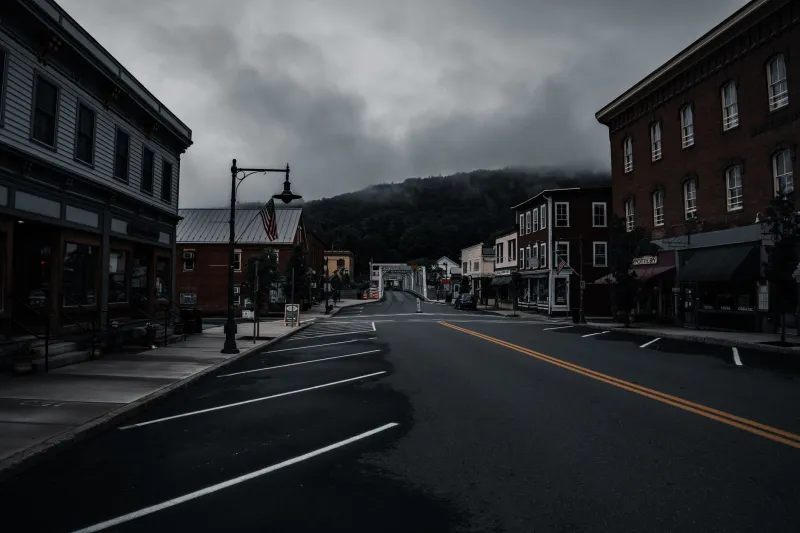
Photo by Photo by Leo_Visions on Unsplash on Unsplash
You know the sign. It shows up about forty feet before the speed limit drops and the gas stations start multiplying: WELCOME TO SOMEWHERE, POP. 4,212, ELEV. 812 FT. Most of us read it at 70 mph, register the population number for half a second, and forget it before the next exit.
A small, stubborn network of people does not forget it. They pull over. They get out. They walk the shoulder until the sign is framed against the sky just right, and then they take a picture of it — the same picture thousands of other people have taken, except this one is theirs.
Call them sign people. They are photographers, road-trippers, municipal-history nerds, and people who simply like the idea that a place has a front door. They keep spreadsheets. They trade coordinates. They have opinions about rivets.
The Detour Is the Point
Marla Kenney, a respiratory therapist from outside Columbus, Ohio, has photographed more than 600 town-limit signs since 2019. She keeps them in a folder organized by state and then by county, because of course she does.
'It's not really about the town,' she said. 'Half the time I don't even go into the town. It's about the exact line where the town begins. There's a spot on the pavement where you cross from nothing into somewhere, and the sign is the only thing that admits it.'
Kenney is not alone. Search around long enough and you'll find Flickr pools, subreddits, and small invite-only Discord servers where people post a fresh find — a faded WELCOME TO sign with a population number that is clearly, charmingly wrong — and the replies are a mix of appreciation, geography trivia, and gentle correction about the sign's font.
They plan routes around them. They know which states have standardized signs and which let towns do whatever they want. They know that a good sign photograph needs morning or late-afternoon light, that an overcast day flattens the chrome, and that a Walgreens bag flapping in the background will ruin an otherwise perfect shot.
Chrome, Rivets, and a Population Frozen in Time
Here is where the subculture gets genuinely interesting: the details.
A town-limit sign is a tiny piece of civic design that almost nobody designs on purpose. Some are extruded aluminum panels with reflective vinyl lettering. Some are hand-painted wood that has been repainted so many times the letters look soft. Some have chrome or stainless letters bolted on individually, which means every single letter casts a small shadow and catches the sun like a piece of jewelry.
The chrome ones are the grail. They cost more, they last longer, and they are slowly vanishing as towns replace them with flat vinyl panels that are cheaper and easier to order from a catalog.
Then there are the population numbers. A sign that reads POP. 1,180 when the actual number is closer to 900 is not a mistake — it's a fossil. It tells you the town last replaced the sign in a year when the number was still true, and nobody has had the budget or the political will to fix it since.
'That's the part I love,' said Drew Sallinger, a sign collector from eastern Washington who runs a small Instagram account devoted to Pacific Northwest town markers. 'A sign will tell you more about a town's finances than its website will. If the population is off by a few hundred, you know the sign is older than the current mayor. If it's off by a few dozen, you know somebody cared enough to update it.'
The Guys Still Casting Letters
Behind every great sign photograph is a sign, and behind a surprising number of signs is a small family shop that has been casting aluminum letters for three generations.
These shops are not nostalgia operations. They make signs for schools, fairgrounds, military bases, and the occasional town that wants something nicer than a vinyl panel. The work is loud, hot, and precise. A single letter might go through a casting, a grinding, a polishing, and a hand-painting stage before it ever gets bolted to a post.
But the economics are brutal. A custom cast-letter welcome sign can run a small town $4,000 to $8,000, sometimes more depending on size and finish. A flat vinyl sign costs a fraction of that. When a town has to choose between repaving a road and replacing a sign that still technically says WELCOME, the sign loses.
'People think we're preserving history,' one shop owner in Nebraska told me. 'We're just making signs. But yeah, when a hand-painted population panel comes in for a refresh, we take a picture of it before we strip it. It feels like the end of something.'
Why a Strip of Metal Feels Like a Handshake
Here is the part that sign people struggle to explain and keep trying anyway: the emotional load.
A town-limit sign is the only official object in America that tells you, in plain language, that you have arrived somewhere. It is not a billboard. It is not an ad. It is a municipality saying: this is us, this is how many of us there are, this is how high we sit above the sea. It is a civic handshake, offered to anyone with a car.
And it is often the least-maintained object in town. The sign that greets you can be older than the road it sits beside. It can carry a population number from 1987 and a font from 1974. It can be leaning eleven degrees to the left because a plow clipped it in February and nobody has been out to fix it.
That leaning is part of the appeal. A perfect sign is a brochure. A leaning sign is a place.
The Sign at the Edge of Your Hometown
The subculture is not really about travel, or photography, or even signs. It is about the small thrill of a boundary — the moment when a stretch of highway stops being anonymous and becomes a place with a name and a population and an elevation and, somewhere past the sign, a diner that closes at 2 p.m.
So the next time you drive home, pull over at the sign. Get out. Look at the population number. Notice whether the letters are chrome or vinyl. Notice whether the sign is leaning.
Somebody in a Discord server would love to see it. And more to the point, you might finally see the thing you have been driving past your entire life.